
Chronic pain can affect nearly every part of life. Back pain, neck pain, joint injuries, and pain after an auto accident can make it harder to work, sleep, exercise, and stay active. Many patients are told their main options are medication, physical therapy, or surgery. But for many people, there may be another path.
At ATL Regen, we focus on non-surgical regenerative medicine in Atlanta designed to help patients reduce pain, improve function, and avoid more invasive procedures when appropriate. Using image-guided PRP injections, interventional spine techniques, and carefully developed treatment protocols, our team works to treat pain at its source.
Formerly known as Atlanta Regenerative Medicine Institute (ARMI), ATL Regen reflects the next phase of our practice: a more streamlined, patient-centered brand built on the same commitment to evidence-based care. Our approach is grounded in clinical experience, guided by imaging, and informed by outcomes tracked across more than 1,820 procedures.
What Is Regenerative Medicine?
Regenerative medicine is a treatment approach designed to support the body’s natural healing response. In orthopedic and spine care, this often includes platelet-rich plasma (PRP) injections, which use a concentrated portion of a patient’s own blood to deliver growth factors to injured or degenerative tissue.
At ATL Regen, PRP is used in targeted ways for conditions involving the spine, joints, soft tissues, and certain chronic pain patterns. Rather than only masking symptoms, regenerative treatment is intended to support healing and improve function in the affected area.
For patients looking for regenerative medicine in Atlanta, this may offer a non-surgical option for conditions such as:
- chronic low back pain
- neck pain
- lumbar radiculopathy
- knee pain
- shoulder pain
- sports injuries
- pain after an auto accident
- myofascial pain and trigger points
How PRP Injections Work
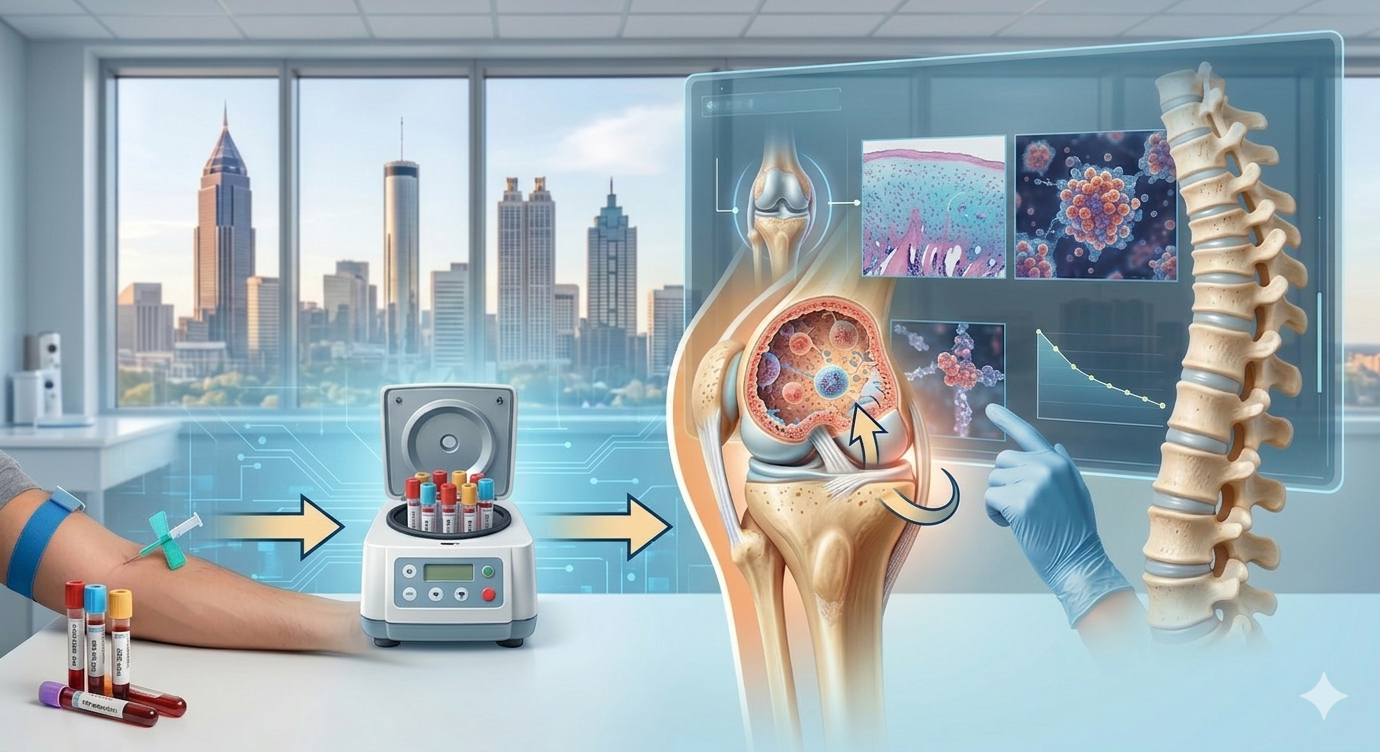
PRP stands for platelet-rich plasma. A small sample of blood is drawn, processed to concentrate the platelets, and then injected into the area being treated. Platelets contain growth factors that play a role in healing and tissue repair.
In the spine and joints, PRP may be used to address inflammation, degeneration, or chronic injury patterns. At ATL Regen, these injections are image-guided for precision, helping ensure treatment is delivered to the intended structure.
That precision matters. A non-surgical treatment is only as good as the diagnosis, the treatment plan, and the placement of the injection. Our practice combines regenerative medicine with interventional expertise so patients receive care that is both biologically informed and technically precise.
Why Many Patients Seek Non-Surgical Pain Relief
Many patients come to ATL Regen because they want to avoid surgery or delay it while exploring more conservative options. Others have already tried medications, rest, physical therapy, chiropractic care, or standard injections and are still dealing with ongoing pain.
Some patients struggle with disc-related lower back pain that makes sitting, standing, driving, or working difficult. Others have knee or shoulder pain that interferes with exercise and daily movement. Some are recovering from an auto accident and want treatment focused on both pain relief and function.
What most patients want is simple:
- a clear diagnosis
- a treatment plan that makes sense
- non-surgical options when appropriate
- a realistic discussion of next steps
- care tailored to the actual source of pain
That is the philosophy behind ATL Regen.
A Data-Backed Approach to Care
One of the ways ATL Regen stands apart is our focus on tracking outcomes and refining protocols over time. In an internal review of more than 1,820 procedures, we observed meaningful improvement patterns across several treatment areas.
According to that internal data:
- lumbar treatment protocols showed greater than 70% relief for chronic back and leg pain
- lumbar radiculopathy showed 72.2% cumulative success
- cervical and thoracic cases showed 78% resolution
- knee PRP cases showed meaningful reductions in pain scores
- shoulder PRP cases also showed meaningful pain reduction
- trigger point injections resolved 70.2% of myofascial pain on the first attempt
These figures reflect internal clinical outcome observations, not guarantees. Every patient is different, and treatment recommendations depend on diagnosis, severity, imaging findings, prior care, and overall goals. Still, the larger point is important: regenerative medicine should not be guesswork. It should be guided by experience, precision, and measurable outcomes.
Conditions Commonly Treated at ATL Regen
At ATL Regen, we commonly evaluate patients with spine, joint, and injury-related complaints.
Back and Leg Pain
Low back pain may be caused by disc injury, degeneration, facet-related pain, nerve irritation, or other structural problems. Some patients also experience leg pain, sciatica, or symptoms consistent with lumbar radiculopathy.
Neck and Upper Back Pain
Cervical and thoracic pain can lead to stiffness, headaches, reduced range of motion, and radiating symptoms into the shoulders or arms.
Knee and Shoulder Pain
Joint pain can make everyday movement harder than it should be. PRP may be considered in selected cases involving chronic inflammation, degeneration, or soft tissue injury.
Auto Accident Injuries
Many ATL Regen patients are dealing with pain after a car accident. These cases may involve the spine, joints, soft tissues, or nerve-related symptoms. Our team is experienced in evaluating and treating injury-related pain, including personal injury cases that require detailed documentation and continuity of care.
Myofascial and Trigger Point Pain
Muscle-based pain can become chronic and frustrating when it is not properly identified. Targeted treatment may help address these pain generators as part of a broader recovery plan.
Why Image Guidance and Experience Matter
Not all injections are the same. In regenerative medicine and interventional pain care, precision is critical. A treatment intended for a specific joint, spinal level, tendon, or soft tissue structure needs to be placed accurately.
At ATL Regen, image-guided procedures are part of how we deliver care with consistency and precision. Just as important, treatment decisions are based on the full clinical picture, which may include symptoms, physical examination, imaging, prior records, and response to previous treatment.
This combination of diagnosis, technical skill, and thoughtful planning is central to how we approach PRP injections in Atlanta and surrounding communities.
Care Across Georgia and Alabama
ATL Regen serves patients across multiple locations in Georgia and Alabama, helping make advanced non-surgical care more accessible. Our regional footprint includes:
- Smyrna
- Stonecrest
- Riverdale
- Macon
- LaGrange
- Huntsville
For patients looking for regenerative medicine in Atlanta, nearby access matters. So does consistency. Our goal is to provide the same high standard of evaluation, treatment planning, and procedural care across each location.
Who We Help
ATL Regen cares for patients across multiple access models, including:
- private pay patients
- workers’ compensation cases
- personal injury patients
This is especially important for patients recovering from trauma, dealing with work-related injuries, or looking for a practical non-surgical option after months of unresolved pain.
What to Expect at Your Consultation
When you come to ATL Regen, the first step is understanding what is actually causing the pain. Treatment should follow diagnosis — not the other way around.
Your consultation may include:
- review of your symptoms and medical history
- review of imaging or prior records
- focused physical examination
- discussion of non-surgical treatment options
- recommendations tailored to your condition and goals
Not every patient is a candidate for PRP or regenerative medicine. But many patients benefit from a careful evaluation that helps them understand whether a non-surgical strategy makes sense before moving toward more invasive procedures.
Frequently Asked Questions
Is PRP the same as stem cell therapy?
No. PRP uses a concentrated portion of your own blood, while stem cell-based treatments involve different biologic materials and treatment approaches.
Is regenerative medicine a replacement for surgery?
Not always. Some patients may benefit from non-surgical care, while others may still need surgical evaluation. The goal is to determine the most appropriate treatment based on your condition.
What conditions may qualify for PRP treatment?
PRP may be considered for selected spine, joint, tendon, and soft tissue conditions, depending on diagnosis, imaging findings, and prior treatment history.
Do you treat pain after auto accidents?
Yes. ATL Regen evaluates and treats many patients with pain after motor vehicle accidents, including spine, joint, and soft tissue injuries.
Do all patients need injections?
No. Treatment recommendations depend on the diagnosis and your goals. Some patients may need further imaging, conservative care, or a different treatment strategy.
Why ATL Regen
Patients choose ATL Regen because they are looking for more than a temporary fix. They want care that is:
- non-surgical when appropriate
- guided by imaging
- informed by clinical outcomes
- tailored to the source of pain
- focused on improving function
Our evolution from ARMI to ATL Regen reflects a continued commitment to evidence-based regenerative care with a clearer identity, broader accessibility, and a strong focus on helping patients return to daily life with less pain and better function.
Schedule a Consultation with ATL Regen
If you are dealing with chronic back pain, neck pain, joint pain, or pain after an auto accident, ATL Regen may be able to help you explore non-surgical treatment options.
Schedule a consultation with ATL Regen to find out whether regenerative medicine, PRP injections, or image-guided interventional treatment may be appropriate for your condition.
Results vary by patient. Treatment recommendations depend on diagnosis, imaging findings, and clinical evaluation. Some regenerative therapies may not be FDA-approved for every indication discussed.