
Golf may not look like a collision sport, but it places very real demands on the body. A single swing involves rotation through the spine, load through the hips and knees, controlled motion at the shoulders, and repeated force through the hands and elbows. Over time, even recreational players can develop pain patterns that affect both their game and their daily function.
At ATL Regen, we help golfers and active adults in Smyrna understand whether their pain is coming from the back, shoulder, elbow, knee, or a combination of movement problems working together. In many cases, golfers are not looking for immediate surgery. They are looking for a more practical question to be answered: What is actually causing the pain, and can I treat it without giving up the activity I enjoy?
Why golfers get hurt
Golf creates stress through repetition. Even if no single swing feels traumatic, thousands of swings over time can overload tissues. Add uneven terrain, walking the course, occasional over-swinging, limited warm-up, or preexisting wear and tear, and the body can begin to compensate.
Common contributors include poor hip mobility leading to extra stress through the lumbar spine, reduced thoracic rotation causing shoulder or neck overload, repetitive grip and impact forces irritating the elbow, lead-leg loading aggravating knee symptoms, and old injuries that resurface when the game volume increases.
Because the golf swing uses the whole body, the painful area is not always the true source of the problem.
Common pain patterns in golfers
Lower back pain is one of the most common golf complaints. Repeated rotation, extension, and load transfer can aggravate disc-related pain, facet irritation, or myofascial strain. The rotator cuff, bursa, and surrounding structures can become irritated from repeated swinging, poor mechanics, or preexisting instability. Golf-related elbow pain may involve tendon irritation, especially around the inner or outer elbow. Walking and turning may also worsen arthritis, meniscal irritation, or patellofemoral stress in the knee.
Why golfers delay care
Golfers often downplay pain because they can still play through it. Many assume soreness is part of the sport. Others worry that evaluation will automatically mean being told to stop golfing or move toward surgery.
At ATL Regen, that is not the starting assumption. The better approach is to understand what the body is tolerating poorly and whether a non-surgical plan can improve the situation without unnecessarily shutting activity down.
Non-surgical treatment options
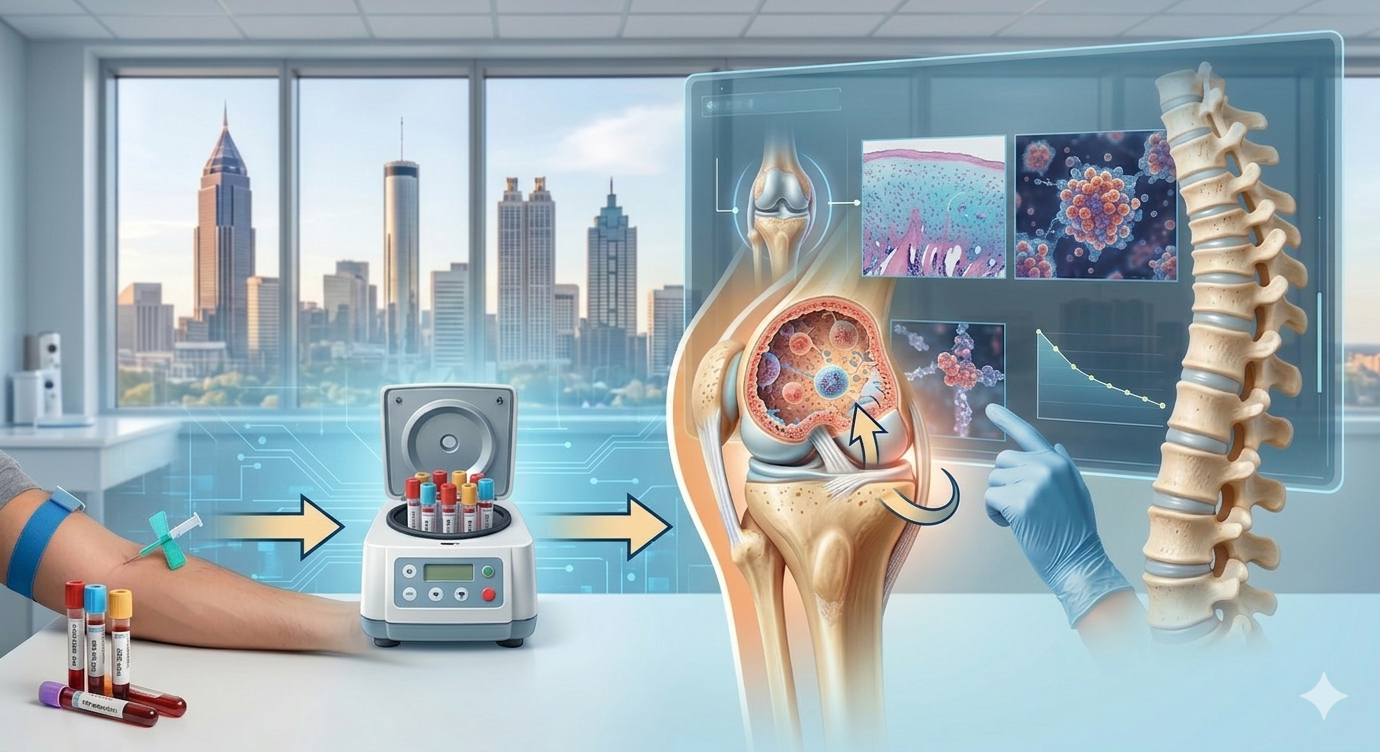
Depending on the diagnosis, treatment may include physical therapy or corrective exercise, mobility work for the hips, thoracic spine, or shoulder, image-guided treatment, treatment of myofascial pain, regenerative options such as PRP in selected cases, and load management with staged return-to-play planning.
The purpose of treatment is not only to reduce soreness. It is to restore function and protect longer-term activity.
Where PRP may fit for golfers
PRP often becomes part of the discussion when a golfer has a tendon, joint, or chronic inflammatory problem and wants a non-surgical option that may support healing. At ATL Regen, PRP is only considered when it matches the diagnosis. The term sports medicine is not specific enough. Diagnosis has to lead the plan.
Why movement mechanics matter
A golfer's painful shoulder may actually be absorbing motion that the thoracic spine is no longer providing. A golfer's low back pain may reflect poor hip rotation or weak gluteal support. This is why pain relief alone is not enough. Good care should also ask why the load is being distributed poorly in the first place.
When golfers should seek formal evaluation
A golfer should consider evaluation when pain is changing the swing, pain lingers after the round, pain is disrupting sleep, the shoulder, elbow, knee, or back feels unstable or weak, simple rest is no longer enough, or there is pain both during golf and in daily life.
Schedule a consultation
If golf-related pain is affecting your back, shoulder, elbow, knee, or overall mobility, ATL Regen can help you determine what may be driving the problem and whether non-surgical treatment can help keep you on the course.