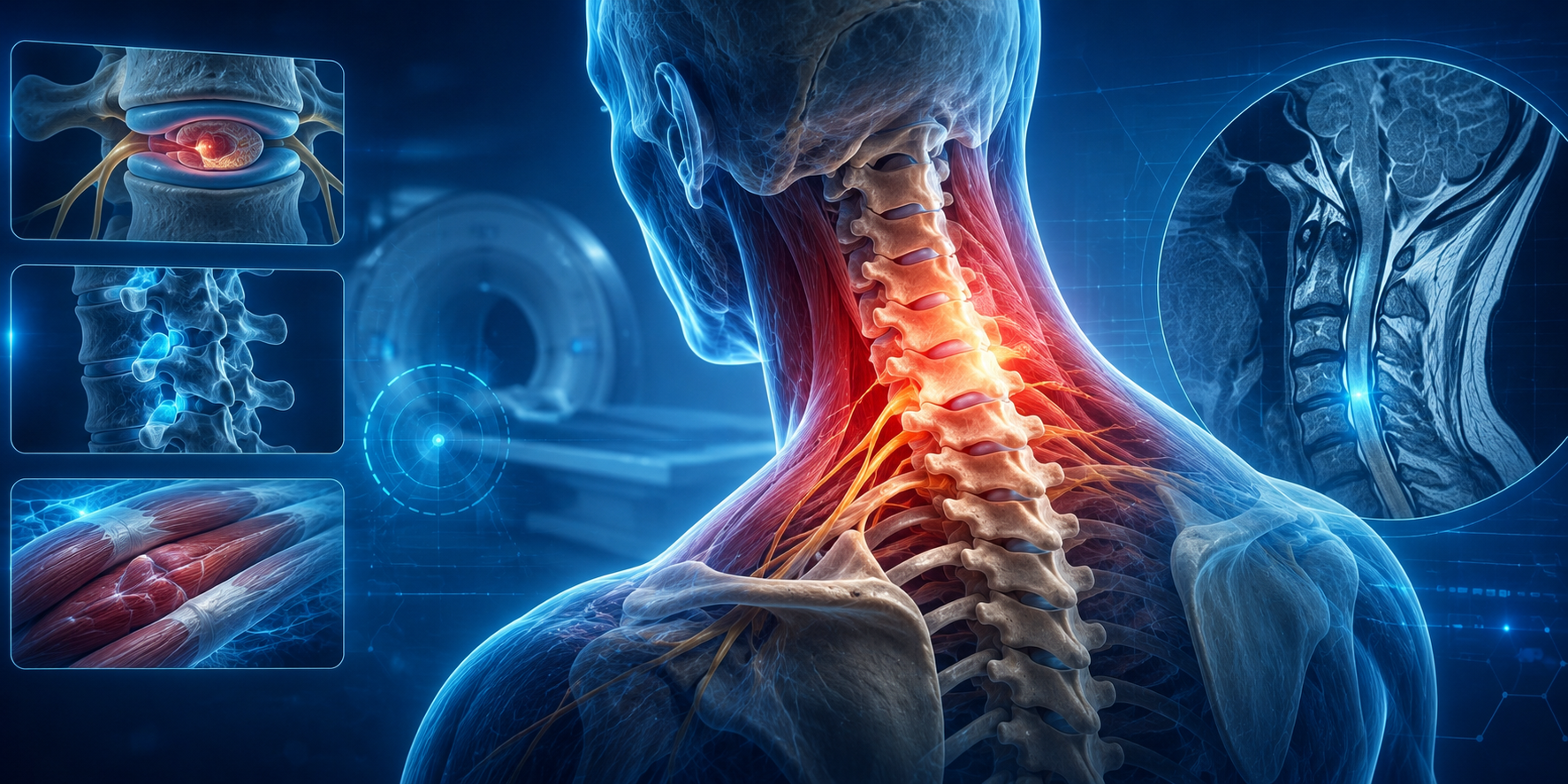
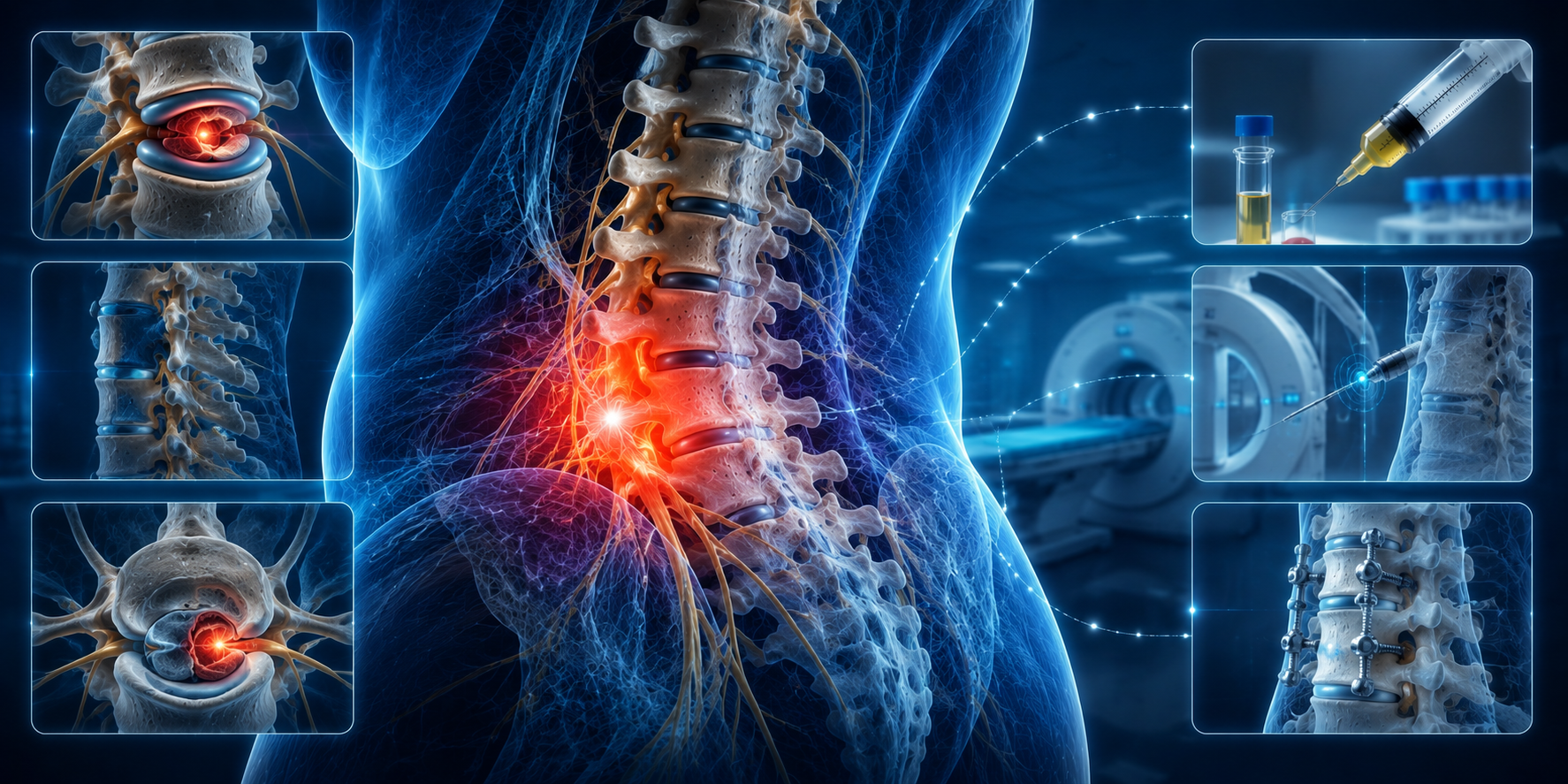
Mid-back pain is easy to underestimate. Patients are often told it is just posture, muscle tension, or stress. Sometimes those factors do play a role. But thoracic pain can be more complex than that. The mid-back can be affected by joints, discs, muscle overload, rib mechanics, posture-related strain, and referred pain from nearby regions.
At ATL Regen, we take thoracic pain seriously because it can affect work, sleep, exercise, breathing comfort, and overall mobility. It is also frequently under-evaluated, which leaves many patients stuck in cycles of massage, stretching, or short-term relief without a clear explanation of what is driving the pain.
Why thoracic pain gets overlooked
Neck pain and low back pain receive much more attention, which often leaves mid-back pain in a gray zone. Patients may describe aching or burning between the shoulder blades, pain with sitting at a desk, stiffness when twisting, pain with driving or prolonged posture, discomfort around the ribs or chest wall, or a constant sense of upper back tightness.
Because these symptoms often sound muscular, patients may never get a deeper evaluation unless the pain becomes severe or persistent.
Common causes of mid-back pain
Muscles around the shoulder blades, thoracic paraspinals, rhomboids, and trapezius can become chronic pain generators. Facet or costovertebral joints can create localized pain that worsens with posture, extension, or rotation. Thoracic disc irritation is less common than in the neck or low back, but still real. Desk work, long drives, repetitive reaching, and poor thoracic mobility can create persistent strain. Problems in the neck, shoulder, or ribs can also refer discomfort into the mid-back.
These conditions can overlap, which is why diagnosis should go beyond the assumption that everything is just a knot.
Why posture is not the whole answer
Posture matters, but it is not a diagnosis by itself. A more useful question is why certain tissues have become irritated enough to keep hurting. Is the problem mostly muscular? Is there a joint component? Is the thoracic region compensating for poor shoulder or cervical motion? Those questions help explain why some patients never seem to stay better, even when they temporarily improve.
How thoracic pain affects daily life
Mid-back pain often interferes with desk work, prolonged sitting, lifting and reaching, turning and twisting, exercise, sleep, and deep breathing or chest-wall movement comfort. Because the thoracic spine connects so closely with the shoulder girdle and rib mechanics, pain in this area can affect more daily functions than patients expect.
Non-surgical treatment options
Depending on the diagnosis, treatment may include physical therapy, thoracic mobility work, posture and ergonomic changes, treatment of trigger points and myofascial pain, image-guided treatment when indicated, regenerative options such as PRP in selected cases, and staged treatment if multiple pain generators are involved.
Why thoracic pain can become chronic
Thoracic pain often becomes chronic when the real pain generator is never identified, nearby regions continue to compensate, posture repeatedly reinforces the problem, or patients keep pushing through the same trigger activities. Over time, a mid-back problem can become part of a larger pain pattern involving the neck, shoulder, or breathing mechanics.
When patients should seek deeper evaluation
A more complete evaluation is worthwhile when pain has lasted longer than expected, sleep is affected, motion is increasingly limited, prior therapy gave only temporary relief, the pain wraps around the ribs or chest wall, neurologic symptoms are present, or the same pain keeps recurring in the same place.
Schedule a consultation
If you are dealing with persistent mid-back pain, shoulder blade pain, thoracic stiffness, or pain that has not improved with basic conservative care, ATL Regen can help evaluate whether the source is muscular, joint-related, spine-related, or mixed.