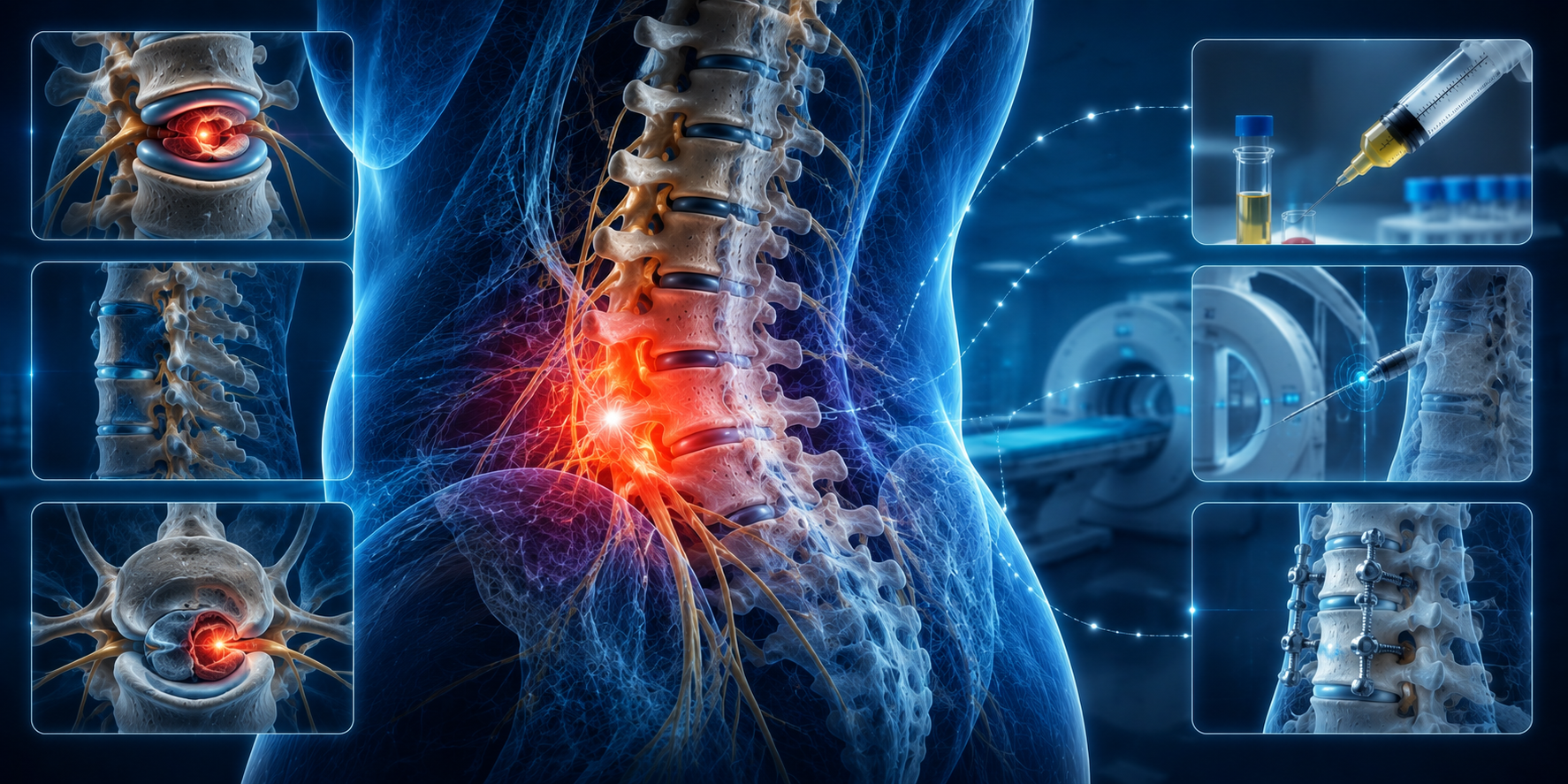
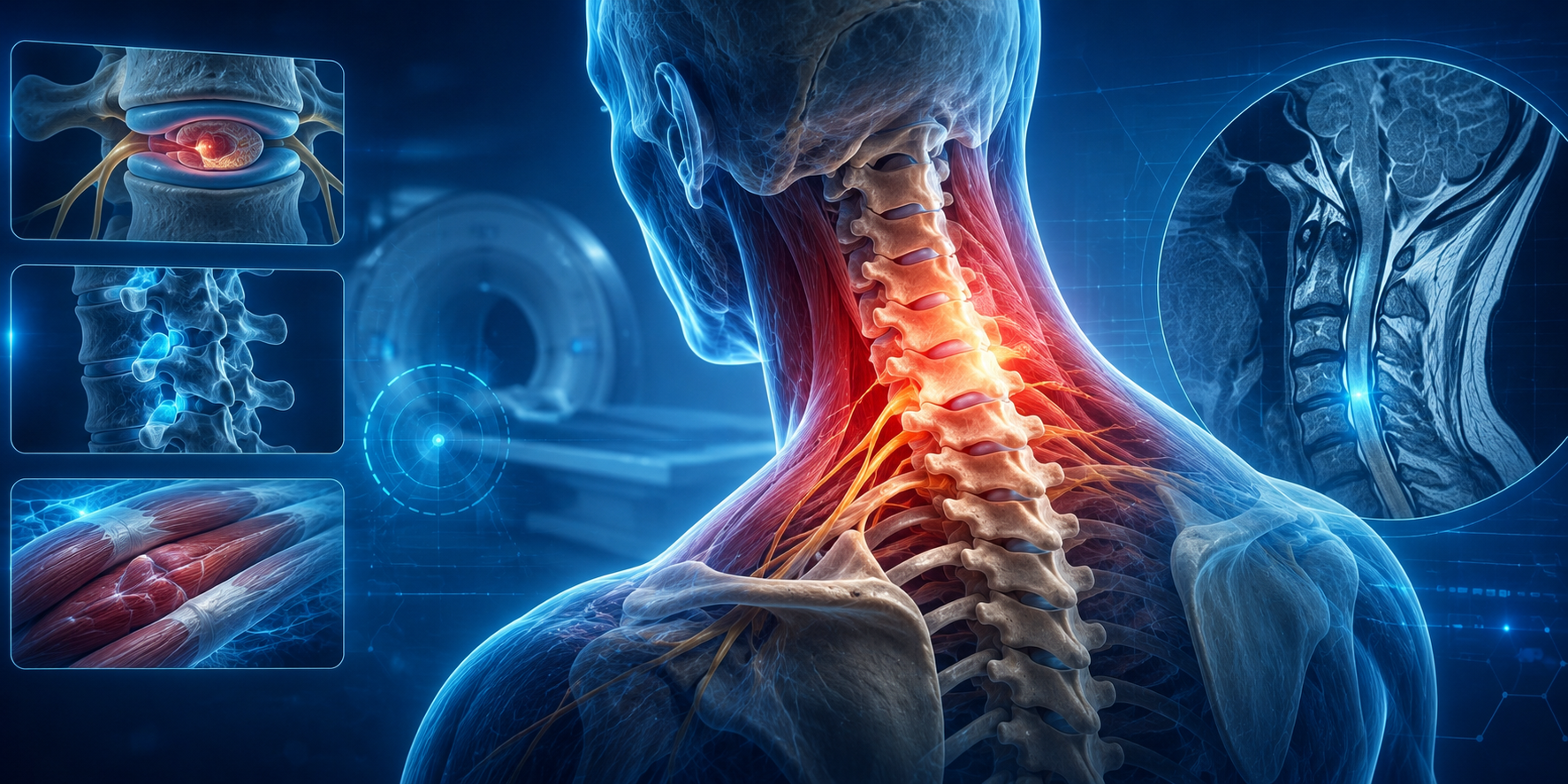
Chronic neck pain can make even simple tasks feel harder than they should. Driving becomes uncomfortable. Looking down at a phone or computer triggers stiffness. Sleeping is interrupted. Some patients also develop pain, tingling, numbness, or weakness into the shoulder, arm, or hand. When physical therapy, medication, or basic conservative care has not fully solved the problem, many people start to wonder whether surgery is the next step.
At ATL Regen, we help patients answer that question more carefully. Surgery is appropriate in some cervical spine cases, but it is not the automatic next move for everyone with neck pain. In many patients, there is room to explore non-surgical options first, especially when the pain generator is understood clearly and the patient is not showing red-flag signs that demand urgent surgical evaluation.
Why neck pain is so disruptive
The cervical spine does more than support the head. It also allows rotation, flexion, extension, and side bending while protecting nerve roots and the spinal cord. When one part of that system becomes inflamed or irritated, the effects can spread quickly. Patients may describe stiffness with turning the head, pain at the base of the neck, pain into the upper trapezius or between the shoulder blades, headaches that seem to start in the neck, pain or tingling down the arm, weakness with grip or overhead activity, and pain with work, driving, sleeping, or exercise.
Because the neck is involved in so many daily tasks, even moderate pain can become very limiting.
Common causes of chronic neck pain
Not all neck pain has the same source. Common causes include disc-related pain, facet-related pain, myofascial pain, acute strain and post-traumatic pain, and postural overload from desk work or repetitive positioning. Many patients have more than one factor at the same time. That is why evaluation matters so much.
When surgery becomes part of the conversation
Surgery may be necessary when there is significant neurologic compromise, progressive weakness, spinal cord compression, instability, or a structural problem that is unlikely to improve with conservative care. Some patients truly do need a surgical opinion, and delaying that referral would not be appropriate.
But there are also many patients who are told that surgery is the next thing simply because the pain has lasted a long time or because imaging shows degeneration. Imaging alone should not make the decision. A degenerative MRI does not automatically mean surgery is the right answer. The real question is how well the scan matches the symptoms, the exam, and the level of functional loss.
Why a second look is often worthwhile
One of the most important things ATL Regen does is help patients understand whether the full pain pattern has been identified. Some people are told their problem is a disc when the pain is primarily muscular and facet-related. Others are treated like they only have tension when their symptoms strongly suggest nerve irritation. Some have a mixed problem that requires a staged approach rather than a single treatment.
That second look is valuable because a patient who is trying to avoid surgery needs more than reassurance. They need a thoughtful diagnosis, a realistic explanation of options, and a clear understanding of what non-surgical treatment can and cannot do.
Non-surgical options for neck pain
Depending on the diagnosis, non-surgical treatment may include focused physical therapy, posture and ergonomic correction, medication support when appropriate, image-guided interventional procedures, treatment for myofascial pain and trigger points, regenerative strategies such as PRP in selected cases, and activity modification with staged recovery planning.
The best treatment depends on the actual pain generator. There is no universal neck pain protocol that fits everyone.
Where PRP may fit
PRP is one of the most discussed non-surgical options in regenerative care, but it should be used carefully and only when it fits the diagnosis. In selected cervical spine or soft tissue cases, PRP may be considered as part of a larger plan designed to reduce inflammation and support tissue healing.
The right question is never just Can PRP help neck pain? The right question is, What structure is causing the neck pain, and is PRP appropriate for that structure and this patient? At ATL Regen, that distinction matters.
The role of imaging in neck pain
Imaging is useful, but it has to be interpreted in context. Many adults have degenerative changes on cervical MRI even when symptoms are mild. At the same time, some patients with significant symptoms do not have dramatic-looking scans. That is why imaging should support the clinical diagnosis, not replace it.
During a cervical evaluation, the most helpful information often comes from putting together the pain pattern, the neurologic exam, range of motion findings, response to prior treatment, and imaging correlation. That is how a more precise plan is built.
Goals of treatment
Most patients with chronic neck pain are not looking for an abstract statistic. They want to know whether they can turn their head comfortably, sleep better, work without constant pain, reduce arm symptoms, avoid surgery if possible, and get back to normal activity. Those are functional goals, and they matter.
Why ATL Regen
Patients choose ATL Regen because they want an option between just live with it and go straight to surgery. They want a practice that understands image-guided care, spine-related symptoms, regenerative treatment when appropriate, and the importance of matching treatment to diagnosis.
Schedule a consultation
If you have chronic neck pain, radiating arm symptoms, recurring stiffness, or pain that has not improved the way you hoped, ATL Regen can help you determine whether non-surgical treatment may still make sense.
A consultation is the best place to start when the goal is not simply to treat pain, but to understand it and build the right plan around it.