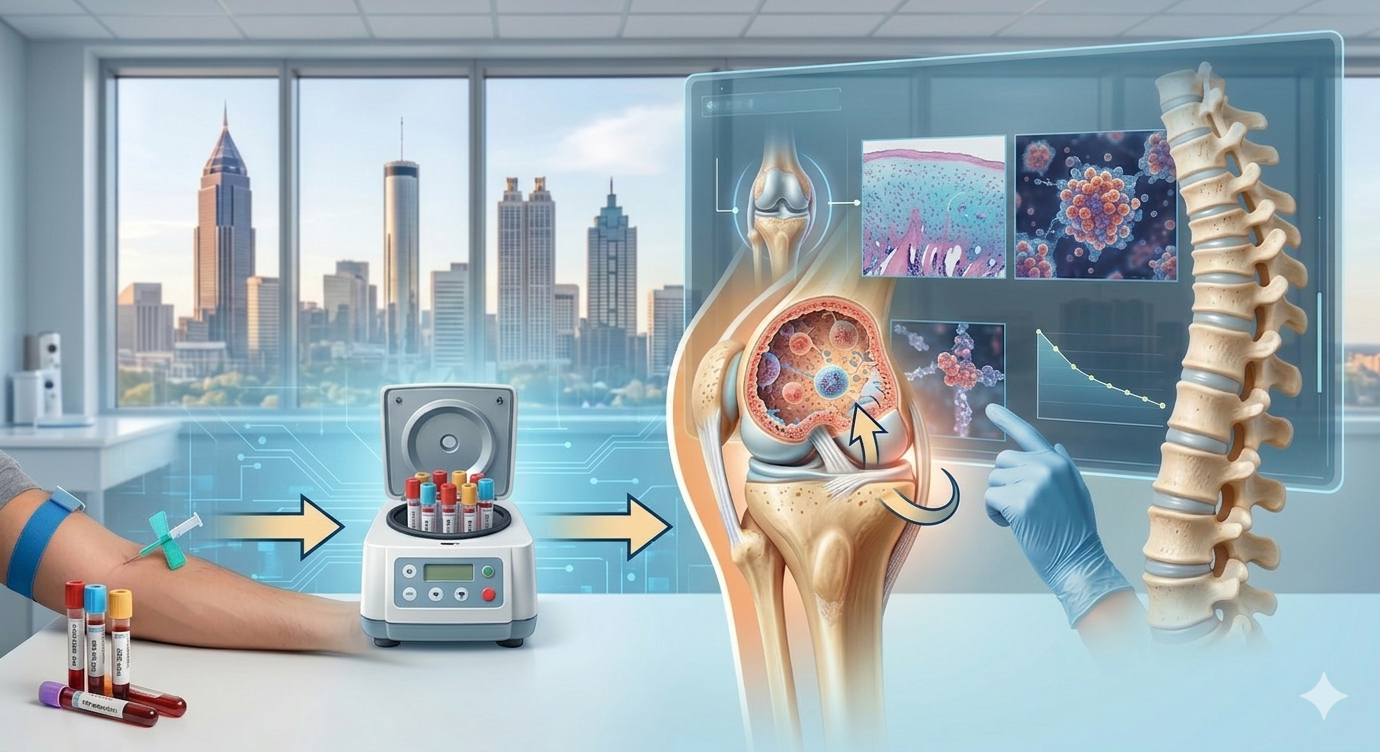
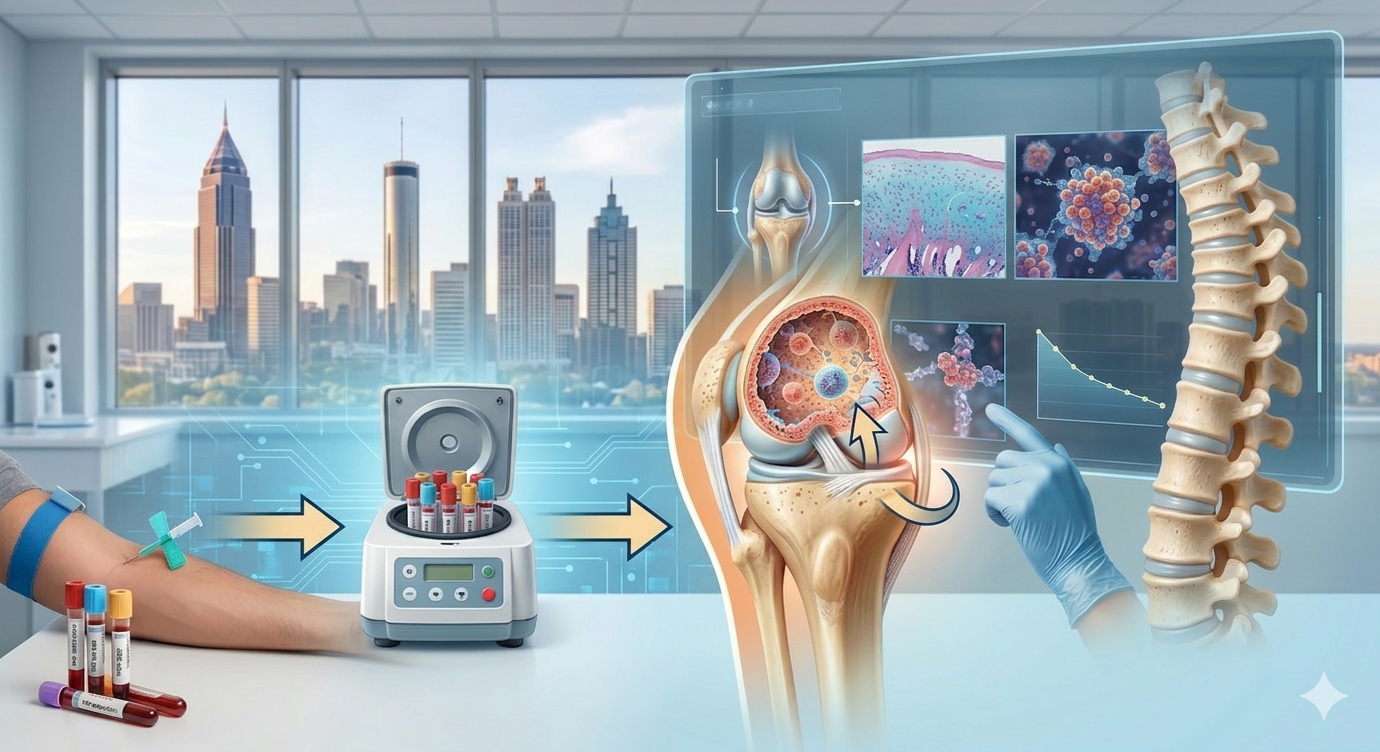
Access to specialized pain care should not depend on whether a patient lives near a major academic center. Many patients dealing with chronic back pain, neck pain, joint pain, myofascial pain, or accident-related injuries need experienced non-surgical care, but they also need that care to be practical. If evaluation and follow-up are too far away, too inconsistent, or too fragmented, even good treatment recommendations become harder to carry out.
At ATL Regen, our regional footprint across Georgia and Alabama is built around access and continuity. The goal is not simply to have multiple locations. The goal is to make it easier for patients to receive specialized evaluation, image-guided care, and follow-up without unnecessary disruption to work, family life, or recovery.
Why regional access matters in musculoskeletal care
Many pain conditions are not solved in a single visit. Patients often need initial diagnosis and consultation, review of outside records or imaging, procedure planning, follow-up to assess response, adjustments in treatment strategy, and continued care if symptoms change or progress.
This is especially true in regenerative medicine and non-surgical spine and joint care, where careful follow-up can shape what happens next. If patients cannot realistically get back to the practice, continuity suffers.
The value of continuity
A multi-location practice only helps if patients experience continuity rather than confusion. That means the patient should feel that their case is understood, their records are part of an ongoing story, and their treatment plan still makes sense from one visit to the next.
Continuity matters because chronic pain often evolves over time, some treatments are staged, function changes gradually rather than all at once, and a partial response may lead to a different next step.
Who benefits most from a regional model
Chronic pain patients with long-standing neck, back, shoulder, knee, or mixed musculoskeletal pain benefit from access to repeated evaluation and follow-up. Patients recovering from auto accidents or personal injuries often involve several phases of care and require precise clinical evaluation. Active and working adults benefit from access that does not turn every follow-up into an all-day travel event.
Why the Southeast needs this type of access
Patients across Georgia and Alabama often face a real gap between general pain care and highly specialized musculoskeletal care. Many people live far enough from large urban centers that travel becomes a barrier. A regional model helps reduce that burden while still offering a specialized, non-surgical approach.
Where regenerative medicine fits into the regional model
Regenerative medicine often works best when it is part of a bigger system of care. A patient considering PRP should not only be thinking about the day of the procedure. The bigger questions are whether the diagnosis was accurate, whether PRP actually fits the tissue problem, how progress will be monitored, and what happens if there is only partial improvement.
These questions are easier to answer well when access and follow-up are built into the care model.
Why standardization matters across locations
The value of multiple locations is not only convenience. It is also consistency. Patients should expect the same overall clinical philosophy, a similar standard for evaluation, image-guided precision where appropriate, coordinated treatment planning, and consistent documentation quality.
Common conditions supported by the network
The regional structure is especially useful for patients dealing with chronic neck pain, cervical radiculopathy, low back pain, lumbar radiculopathy and sciatica, shoulder pain, knee pain, myofascial pain, workers' comp injuries, and personal injury and auto-accident recovery.
Schedule a consultation
If you are looking for non-surgical regenerative or interventional care in Georgia or Alabama, ATL Regen can help you understand what may be causing your pain and whether treatment is available at a location that fits your needs.