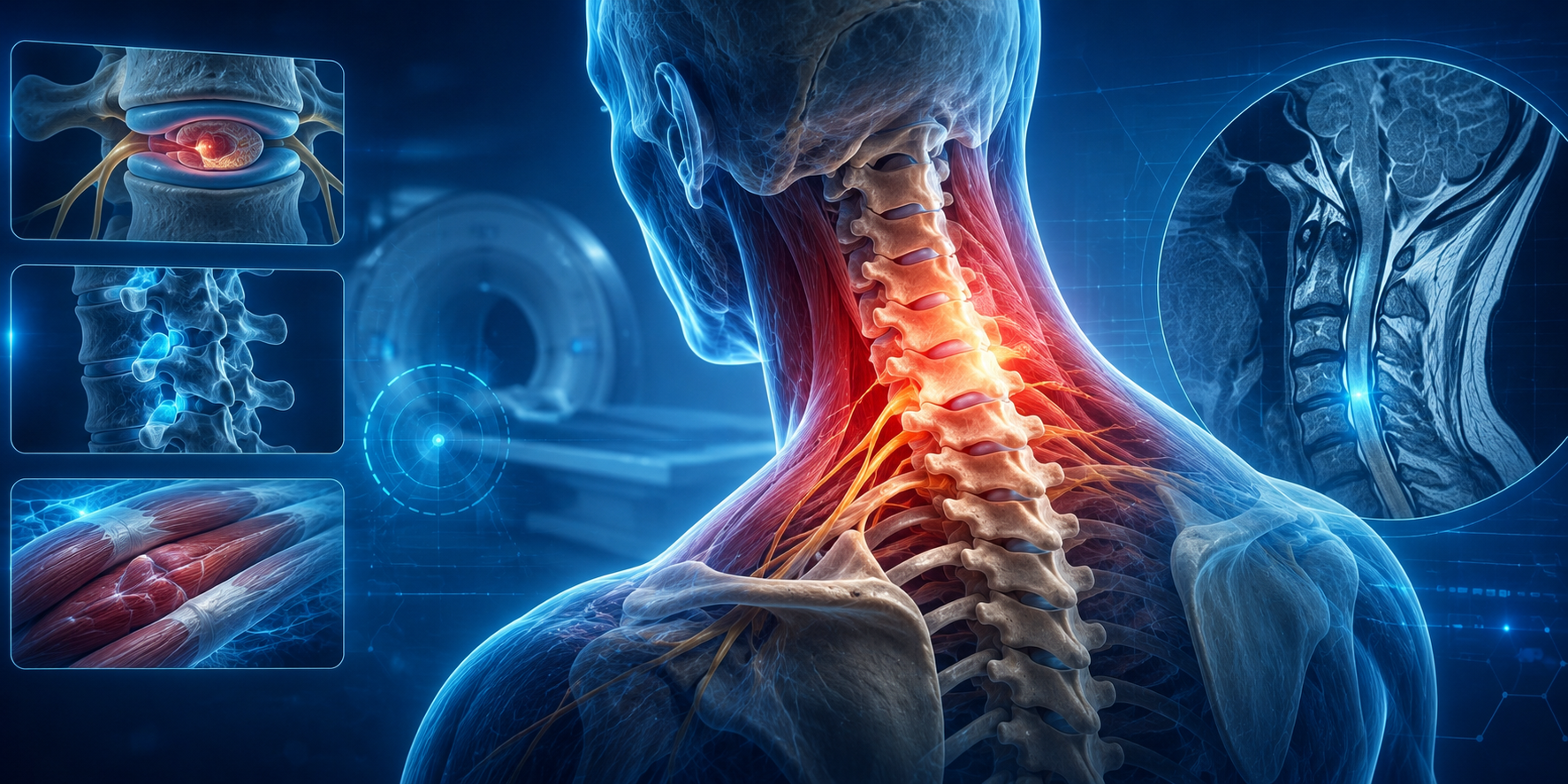
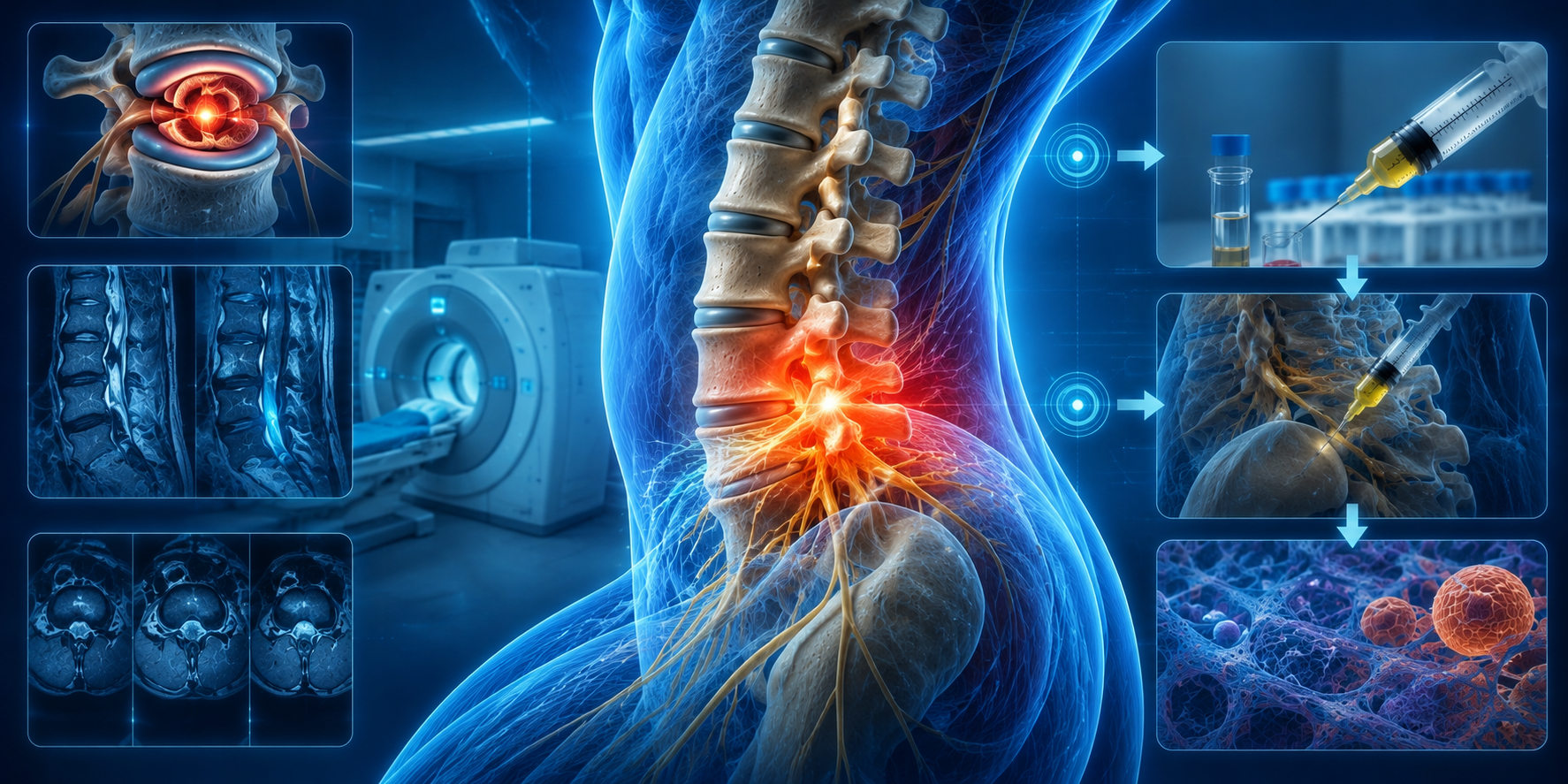
Sciatica can be one of the most disruptive pain patterns a patient experiences. It is one thing to have a sore lower back. It is another thing entirely when the pain begins traveling into the buttock, thigh, calf, or foot. Sitting becomes harder. Driving gets worse. Sleep is affected. Patients often say the leg pain is what finally convinces them they need a more serious answer.
At ATL Regen, we evaluate sciatica with a focus on whether the symptoms actually reflect lumbar radiculopathy, what is irritating the nerve, and whether non-surgical treatment still makes sense before more invasive steps are taken.
What sciatica means
Patients use the word sciatica to describe many kinds of radiating leg pain. In common use, that makes sense. But from a clinical standpoint, sciatica usually suggests irritation of a lower lumbar nerve root that contributes to pain along the path of the sciatic nerve. The more precise term in many cases is lumbar radiculopathy.
Common symptoms of lumbar radiculopathy
Patients may experience sharp or burning pain down the leg, tingling or numbness, weakness, pain made worse by sitting or bending, low back pain combined with leg pain, symptoms traveling below the knee, or a sense that the leg, not the back, is the main problem.
Some patients have dramatic leg pain with only modest low back pain. Others have both strongly. That variation is common.
Common causes of sciatica
A disc can protrude or herniate and irritate the nearby nerve root. Degenerative changes can narrow spaces around the nerve, especially in older adults. Loss of disc height or bony changes may reduce the space where the nerve exits the spine. Sometimes the nerve is not only mechanically compressed, but inflamed, which can amplify the pain pattern.
Because these causes differ, treatment decisions should not be made from the word sciatica alone.
Why function often declines quickly
Lumbar radiculopathy affects daily life in very practical ways. Patients often notice pain with sitting through meetings or commutes, limited walking tolerance, poor sleep due to leg pain, difficulty bending or lifting, and fear of activity because symptoms flare so easily.
The role of imaging
MRI is often useful in radiculopathy because it may help show whether a disc, narrowing, or another structural issue correlates with the symptoms. But imaging should still be interpreted carefully. Many adults have degenerative findings that may not be the true source of their pain.
Non-surgical options for sciatica
Depending on the diagnosis and severity, treatment may include physical therapy, activity modification, medication support when appropriate, image-guided lumbar treatment, treatment of overlapping muscular pain generators, regenerative options such as PRP in selected cases, and staged treatment if the condition is chronic or only partially improving.
Why some cases need a staged plan
Sciatica often improves in stages. Some patients get meaningful relief from the first step in treatment. Others improve partially and then need further planning because symptoms remain, the condition has been present for a long time, or multiple pain generators are involved.
When surgery becomes more likely
Surgical evaluation may be appropriate if the patient has progressive weakness, bowel or bladder red flags, significant neurologic loss, severe compression with clear correlation, or failure of appropriate non-surgical care.
Schedule a consultation
If you are dealing with sciatica, radiating leg pain, numbness, tingling, or suspected lumbar radiculopathy, ATL Regen can help evaluate what may be driving the symptoms and whether non-surgical treatment still makes sense.