
Shoulder pain can be confusing, especially when imaging reports mention more than one possible diagnosis. Two of the most common terms patients hear are impingement and rotator cuff tear. These conditions can overlap, sound alarming, and often produce similar symptoms, which leaves many patients unsure whether they are dealing with inflammation, tissue damage, or something that automatically requires surgery.
At ATL Regen, we help patients sort through what their shoulder pain actually means and whether non-surgical treatment still deserves serious consideration before moving toward an operation.
What shoulder impingement is
Shoulder impingement usually refers to a pattern where soft tissues in the shoulder, often including the rotator cuff tendons and surrounding bursa, become irritated or compressed during movement. Patients commonly feel pain when reaching overhead, putting on a shirt, reaching behind the back, or sleeping on the affected side.
The pain often comes from a combination of tendon irritation, bursitis, poor scapular mechanics, repetitive overhead use, reduced space during movement, and chronic inflammation. In many cases, the issue is not a single dramatic injury, but a pattern of repeated irritation.
What a rotator cuff tear is
A rotator cuff tear involves actual disruption of tendon fibers. Tears may be partial-thickness or full-thickness, small or large, traumatic or degenerative. A patient with a cuff tear may notice pain with lifting or reaching, weakness with overhead tasks, loss of strength when rotating the arm, night pain, and difficulty with sports, exercise, or work activity.
Some tears are highly symptomatic. Others are visible on imaging but are not the whole explanation for the patient's pain.
Why these two diagnoses overlap
Impingement and cuff tearing are not always separate categories. Chronic impingement can contribute to tendon damage over time, and a tendon with degenerative changes may become easier to irritate. Some patients have both mechanical impingement and partial cuff pathology. Others have MRI findings that sound severe but symptoms that are more inflammatory than structurally catastrophic.
That overlap is why the imaging report alone is not enough to decide treatment.
The role of imaging
MRI and ultrasound can help show whether the cuff is inflamed, frayed, partially torn, or fully torn. But imaging still has to be interpreted in the context of pain location, range of motion, strength testing, symptom severity, function, and patient goals.
Many adults have rotator cuff changes on imaging as part of age-related wear, but not all of those findings are the main source of pain. The right question is not only what does the MRI show, but what does it mean in this patient?
When surgery may be avoidable
Not every shoulder tear requires surgery. The right decision depends on the size and nature of the tear, whether strength is preserved, whether the pain is more inflammatory than mechanically unstable, the patient's age and goals, response to conservative treatment, and whether function is still good enough to justify non-surgical management first.
Non-surgical treatment options
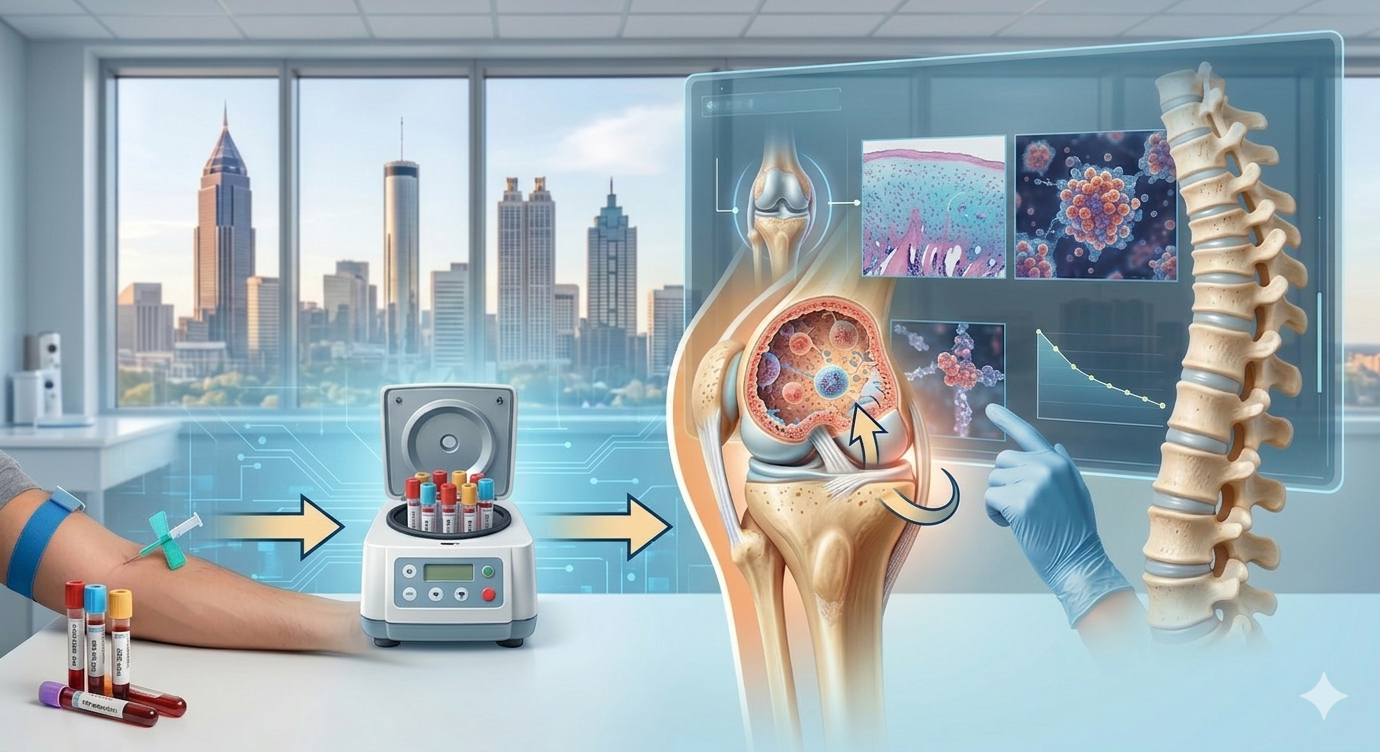
Depending on the diagnosis, treatment may include physical therapy, scapular stabilization work, rotator cuff strengthening, mobility work, activity modification, image-guided treatment, regenerative options such as PRP in selected cases, and treatment of overlapping myofascial contributors.
Where PRP may fit
PRP often becomes part of the discussion because patients want something between basic conservative care and surgery. At ATL Regen, PRP is considered when the diagnosis, tissue quality, and treatment goals make it reasonable. PRP for chronic tendinopathy is a different conversation than PRP for a major structural failure.
When patients should seek evaluation
Formal evaluation is worthwhile when pain is interfering with sleep, overhead movement is limited, weakness is noticeable, exercise or work tasks are restricted, symptoms keep recurring, the issue followed a traumatic event, or the MRI report sounds concerning but the next step is unclear.
Schedule a consultation
If you have shoulder pain, weakness, night pain, or imaging that mentions impingement or rotator cuff tearing, ATL Regen can help you understand what those findings mean and whether non-surgical treatment still deserves consideration.